Gerai, kad niekada nekilo mintis kliedėti apie vinilinio garso išskirtinius privalumus (būtent garso, apie emocinius vinilo teikiamus viražus turiu tik geriausias patirtis, o apie tai 4-toje rašinio dalyje), nors jais žavėjausi nuo 1967 iki 1990. Giminės Kanadoje, USA, Venesueloje, Kolumbijoje ištisus dešimtmečius siuntė vinilinius LP (Long Play album). Tie diskai buvo orginalūs, didžioji dauguma iškepti analoginio garso virtuvėse. Pavyzdys suvokimui, kas yra tikras orginalus vinilinis diskas. Jei tu turi 1973 metų kovo 23 dieną Harvest firmos su serijos numeriu: 1E 064 o 05249 išleistą Pink Floyd vinilinį albumą “Dark Side Of The Moon”, tai tu laimingas melomanas - tu turi TIKRĄ vinilinį diską.
Tikėtina, jog jis traška, bet šiuo atveju, tai nėra svarbiausia. Jei šį Pink Floyd vinilo diską šiandien išleido NoName firma kur nors Pietryčių Kinijoje, garso šaltiniu pasirinkus piratinį mp3 196 kbps kokybės įrašą, tai toks diskas yra totalus feikas su skaitmeniniu įrašu, įrašytu į plastmasės gabalą. Kad būtų aiškiau, pasiklaukite pats savęs - ar į rimtą priėmimą eitumėte su Armani kostiumu, pirktu Gariūnuose už viskio butelio kainą? Gal pirktumėte Rolex laikrodį už 15 eurų. Man tokį siūlė Kanaruose už 35, nusiderėjau iki 15, bet vis tiek nepirkau. Jūs neperkate žmonai perlų karolių, kurie pagaminti iš polietileno? Turtingi ir protingi tarpsta kvailių sąskaita. Tai aksioma. Reikia jums vinilo? Prikepsim. Tad kolekcionuoti falšyvus vinilo gabalus gal vis tik nėra rimtas užsiėmimas?
Dar vienas geras pavyzdys: VolksWagen koncerno viceprezidento viešas atsakymas spaudos konferencijoje. Jo klausė, kodėl į mažo litražo automobilius montuojate dyzelinius variklius. Jis atsakė, mes suprantame, jog tai nerimta, bet pirkėjas to reikalauja. Pirkejo poreikiai lemia rinkos kryptis. Visa tai neliečia šakninių vinilą produkuojančių firmų, kurios šiandien remasterina senuosius originalius įrašus ir taip tenkina vinilo gerbėjų poreikius. Tai yra toks pats gėris garso kokybės prasme, kaip ir CD ar kiti lossless (FLAC, WAV, kiti) garso įrašų formatai, tik klausyti jų skleidžiamą kokybišką garsą reikia didesnių investicijų nei CD aparatūrai.
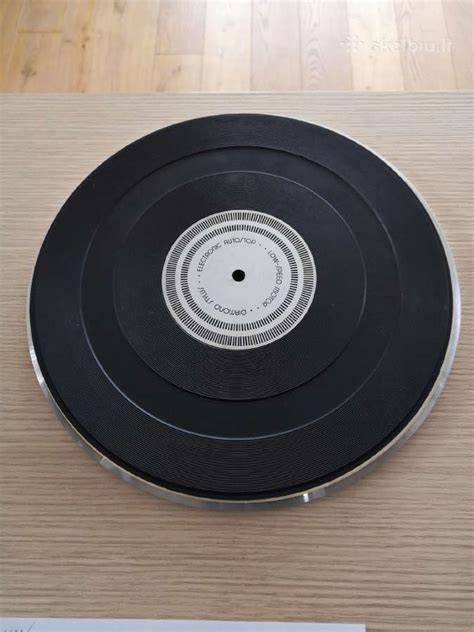
Jūsų valia rinktis. Download free Vinyl record PNG images and clipart with transparent backgrounds. A phonograph record (also known as a gramophone record, especially in British English), often simply record, is an analog sound storage medium in the form of a flat disc with an inscribed, modulated spiral groove. The groove usually starts near the periphery and ends near the center of the disc. At first, the discs were commonly made from shellac; starting in the 1940s polyvinyl chloride became common. The phonograph disc record was the primary medium used for music reproduction throughout the 20th century. It had co-existed with the phonograph cylinder from the late 1880s and had effectively superseded it by around 1912. Vinyl records retained the largest market share even when new formats such as the compact cassette were mass-marketed. By the 1980s, digital media, in the form of the compact disc, had gained a larger market share, and the vinyl record left the mainstream in 1991. Since the 1990s, vinyl records continue to be manufactured and sold on a smaller scale, and are especially used by disc jockeys (DJs) and released by artists in mostly dance music genres, and listened to by a growing niche market of audiophiles. in 2014, a 260% increase since 2009. As of 2017, 48 vinyl record pressing facilities remain worldwide, 18 in the United States and 30 in other countries. The phonautograph, patented by Léon Scott in 1857, used a vibrating diaphragm and stylus to graphically record sound waves as tracings on sheets of paper, purely for visual analysis and without any intent of playing them back. In the 2000s, these tracings were first scanned by audio engineers and digitally converted into audible sound. Phonautograms of singing and speech made by Scott in 1860 were played back as sound for the first time in 2008. In 1877, Thomas Edison invented the phonograph. Unlike the phonautograph, it could both record and reproduce sound. Despite the similarity of name, there is no documentary evidence that Edison's phonograph was based on Scott's phonautograph. Edison first tried recording sound on a wax-impregnated paper tape, with the idea of creating a "telephone repeater" analogous to the telegraph repeater he had been working on. Although the visible results made him confident that sound could be physically recorded and reproduced, his notes do not indicate that he actually reproduced sound before his first experiment in which he used tinfoil as a recording medium several months later. The tinfoil was wrapped around a grooved metal cylinder and a sound-vibrated stylus indented the tinfoil while the cylinder was rotated. The recording could be played back immediately. The Scientific American article that introduced the tinfoil phonograph to the public mentioned Marey, Rosapelly and Barlow as well as Scott as creators of devices for recording but, importantly, not reproducing sound. Edison also invented variations of the phonograph that used tape and disc formats. Numerous applications for the phonograph were envisioned, but although it enjoyed a brief vogue as a startling novelty at public demonstrations, the tinfoil phonograph proved too crude to be put to any practical use. A decade later, Edison developed a greatly improved phonograph that used a hollow wax cylinder instead of a foil sheet. This proved to be both a better-sounding and far more useful and durable device. Lateral-cut disc records were developed in the United States by Emile Berliner, who named his system the "gramophone", distinguishing it from Edison's wax cylinder "phonograph" and American Graphophone's wax cylinder "graphophone". Berliner's earliest discs, first marketed in 1889, only in Europe, were 12.5 cm (approx 5 inches) in diameter, and were played with a small hand-propelled machine. Both the records and the machine were adequate only for use as a toy or curiosity, due to the limited sound quality. In the United States in 1894, under the Berliner Gramophone trademark, Berliner started marketing records of 7 inches diameter with somewhat more substantial entertainment value, along with somewhat more substantial gramophones to play them. Berliner's records had poor sound quality compared to wax cylinders, but his manufacturing associate Eldridge R. Johnson eventually improved it. Abandoning Berliner's "Gramophone" trademark for legal reasons, in 1901 Johnson's and Berliner's separate companies reorganized to form the Victor Talking Machine Company in Camden, New Jersey, whose products would come to dominate the market for many years. Emile Berliner moved his company to Montreal in 1900. The factory, which became the Canadian branch of RCA Victor still exists. In 1901, 10-inch disc records were introduced, followed in 1903 by 12-inch records. These could play for more than three and four minutes, respectively, whereas contemporary cylinders could only play for about two minutes. In an attempt to head off the disc advantage, Edison introduced the Amberol cylinder in 1909, with a maximum playing time of 4 1⁄2 minutes (at 160 rpm), which in turn were superseded by Blue Amberol Records, which had a playing surface made of celluloid, a plastic, which was far less fragile. Despite these improvements, during the 1910s discs decisively won this early format war, although Edison continued to produce new Blue Amberol cylinders for an ever-dwindling customer base until late in 1929. By 1919, the basic patents for the manufacture of lateral-cut disc records had expired, opening the field for countless companies to produce them.
Nuo fonografų iki „Spotify“: trumpa muzikos industrijos istorija
Vinilo istorijos esmė ir šiuolaikinė perspektyva
Viniliniai įrašai išliko svarbūs laikui bėgant: jų kokybė, analoginis garso kelias ir kolekcionierių aistra skatina išlaikyti šią raišką net kai skaitmeniniai formatai plinta. 260% augimas 2014 metais rodo, kad rinka nepastovi, bet atpažįstama vertė skatina naujų leidinių perdirbinimą ir remasterinimą, siekiant atnaujinti senus įrašus pagal šiuolaikinio garso standartus.
Pasak istorinių šaltinių, fonografo plokštelė iš pradžių buvo gaminama iš kanopos (shellac), o vėliau - iš polivinilchlorido (PVC). Lateral-cut plokštelės Emile Berlinerio dėka užėmė svarbią vietą rinkoje, o 1919-1929 m. laikotarpiu rinka įsitvirtino ir plėtėsi. 1901-1903 metų laikotarpiu įvestos 10-12 colių plokštės leido žymiai ilgesnį grojimo laiką, palyginti su tuometiniais cilindrais. Galiausiai vinilas išliko kaip pagrindinė forma ir netgi susidūrė su naujaisformatais, tokiais kaip kasetės, tačiau tolydžiai išliko tikrojo garso entuziastų pasirinkimuose.
Tarp žinomų įvykių yra ir 1877 metų Edisono išradimas, kurio fonografo galimybės pirmiausia leido įrašyti ir atkurti garsą, ir fondiniai pokyčiai, kurie skatino plokštelių plėtrą. Nuo XIX a. pabaigos iki XXI a. pradžios vinilo plokštelė išliko pagrindiniu garso atkūrimo būdu iki skaitmeninių formatų įsigalėjimo, o šį laikotarpį lydėjo remasteriavimai ir nauji leidiniai, kurie išlaikė aukštą kokybės standartą.