Yra keletas būdų, kaip klasifikuoti įprastas kompiuterio pagrindines plokštes:1、Pagal pagrindinėje plokštėje naudojamą procesorių 386 pagrindinė plokštė, 486 pagrindinė plokštė, Pentium (586) pagrindinė plokštė, Pentium Pro (686) pagrindinė plokštė.2、Pagal pagrindinės plokštės įvesties / išvesties magistralės tipą(1) ISA (pramonės standartinė architektūra)(2) EISA (pramonės standartinės architektūros išplėtimas)(3) MCA (mikro kanalas)(4) VESA (Elektroninių vaizdo įrašų standartų asociacija)(5) PCI (periferinių komponentų sujungimas)3、pagal loginio valdymo lusto komponentusŠiuose mikroschemų rinkiniuose integruotas procesoriaus, CACHE, I/0 ir magistralės valdymas, o didesnės nei 586 pagrindinės plokštės ypatingą dėmesį skyrė mikroschemų rinkinio vaidmeniui.(1) NX Neptune (Neptune), palaiko Pentium 75 MHz arba aukštesnį procesorių.(2) FX turi šį lustų rinkinį tiek 430, tiek 440 serijose. Pirmasis naudojamas Pentium, o antrasis naudojamas Pentium Pro.(3) SiS serija.(4) „Opti“ serijoje yra mažiau pagrindinių plokščių pardavėjų.4、pagal pagrindinės plokštės struktūrą(1) Standartinio dydžio pagrindinėse plokštėse kai kurios 486 ir 586 pagrindinės plokštės taip pat naudoja AT struktūros išdėstymą.(2) „Baby AT“ pagrindinė plokštė yra mažesnė nei AT pagrindinė plokštė. Daugelis integruotų originalių mašinų pagrindinių plokščių pirmiausia perima šią pagrindinės plokštės struktūrą.(3) ATX 127; Patobulinta AT pagrindinė plokštė optimizavo komponentų išdėstymą pagrindinėje plokštėje ir turi geresnį šilumos išsklaidymą bei integravimą. Jį reikia naudoti su specialia ATX važiuokle.(4) Integruotoje pagrindinėje plokštėje integruotos įvairios grandinės, tokios kaip vaizdo plokštė ir ekranas. Paprastai jis gali veikti neįdėjus kortelės. Jis turi didelės integracijos ir vietos taupymo pranašumus.(5) NLX Intel' naujausia pagrindinės plokštės struktūra, didžiausia ypatybė yra ta, kad pagrindinė plokštė ir CPU atnaujinimai yra lankstūs, patogūs ir efektyvūs5, pagal funkciją(1) PnP funkcija Pagrindinė plokštė su PnP BIOS ir PnP operacine sistema (pvz., Win95) gali padėti vartotojams automatiškai konfigūruoti pagrindinio kompiuterio periferinius įrenginius. Jis gali automatiškai pereiti į laukimo ir ramybės būseną, kai vartotojas nenaudoja pagrindinio kompiuterio, sumažindamas procesoriaus ir įvairių komponentų energijos suvartojimą per šį laikotarpį.(2) Pagrindinė plokštė be jungčių Tai naujo tipo pagrindinė plokštė, kuri yra tolesnis PnP pagrindinės plokštės patobulinimas. Tokio tipo pagrindinėse plokštėse net procesoriaus tipui, darbinei įtampai ir pan. Is the Intel Pentium 4 Processor Suitable for Modern Computing Needs? Answer: The Intel Pentium 4 processor is not suitable for modern computing needs due to its outdated architecture and limited performance capabilities. The Pentium 4 processor, introduced by Intel in the early 2000s, was a significant step forward in its time. However, today’s computing demands-such as high-resolution video editing, gaming, and multitasking-require more advanced hardware. If you're considering a Pentium 4 for a new build or upgrade, it's important to understand its limitations. NetBurst Architecture The Pentium 4 uses the NetBurst architecture, which was designed for high clock speeds but lacked the efficiency of later architectures like Core 2 or Skylake. Socket 478 Most Pentium 4 processors use the Socket 478, which is incompatible with modern motherboards. This makes it difficult to integrate into current systems. Memory Support Pentium 4 processors typically support DDR memory, not the DDR3 or DDR4 used in modern systems. This limits performance and compatibility. If you're looking for a processor for retro computing or running older software, the Pentium 4 may still be useful. However, for modern applications, you should consider more recent processors like the Intel Pentium G4400 or Intel Core i3/i5 series. Identify your computing needs (e.g., gaming, office work, multimedia). Check the compatibility of the Pentium 4 with your motherboard and memory. Compare its performance with modern processors using benchmarks or real-world usage. How Can I Choose the Best Pentium 4 Processor for My Budget? Answer: To choose the best Pentium 4 processor for your budget, focus on clock speed, cache size, and compatibility with your motherboard and memory. When shopping for a Pentium 4 processor, especially on platforms like AliExpress, it's important to understand the key factors that affect performance and value. Here’s how to make an informed decision. Check the L2 cache size-larger caches improve performance in data-intensive tasks. Ensure the processor is compatible with your motherboard (e.g., Socket 478 or LGA 775 for later models). Compare prices across different models and sellers to find the best value. If you're building a budget system for basic tasks like web browsing and office work, the Pentium 4 3.0GHz or 3.2GHz models are good options. However, for more demanding tasks, consider newer processors like the Intel Pentium 4th generation or Intel Pentium pro processor. What Are the Common Issues Users Face with the Pentium 4 Processor? Answer: Common issues with the Pentium 4 processor include overheating, compatibility problems, and poor performance in modern applications. Many users who have used or are considering using the Pentium 4 processor report similar issues. These problems often stem from the processor’s outdated design and lack of support for modern hardware and software. Overheating The Pentium 4 generates more heat than modern processors due to its high clock speeds and inefficient architecture. This can lead to thermal throttling or system instability. Compatibility Most Pentium 4 processors use Socket 478 or LGA 775, which are not supported by modern motherboards. This makes it difficult to upgrade or integrate into new systems. Performance Limitations The Pentium 4 lacks features like hyper-threading and modern instruction sets, making it unsuitable for modern software and multitasking. To mitigate these issues, consider the following steps: Ensure proper cooling with a high-quality heatsink and fan. Use compatible memory (e.g., DDR or DDR2) and a compatible motherboard. Install lightweight operating systems and software to reduce the load on the processor. Consider using the Pentium 4 in a retro computing setup or for running older software. If you're experiencing performance issues, it may be time to upgrade to a more modern processor like the Intel Pentium 4 quad core or Intel Pentium G4400 processor. What Do Users Say About the Performance and Reliability of the Pentium 4 Processor? Answer: Users generally report that the Pentium 4 processor is reliable for basic tasks but lacks the performance needed for modern computing. Many users who have used the Pentium 4 in older systems or retro builds have shared their experiences. While the processor is known for its stability, it often falls short in terms of performance and efficiency. Reliability Users often praise the Pentium 4 for its stability and long-term reliability, especially in older systems. Performance Most users agree that the Pentium 4 is not suitable for modern applications but works well for basic tasks like web browsing and office work. Compatibility Some users have reported difficulty finding compatible hardware, especially with modern motherboards and memory. In one case, a user built a retro PC using the Intel Pentium 4 3.0GHz and paired it with a Socket 478 motherboard and DDR memory. The system ran Windows XP and basic office software without issues. However, when attempting to run modern software like Microsoft Office 2016, the system became sluggish and unresponsive. If you're considering the Pentium 4 for a retro build or for running older software, it can still be a viable option. However, for modern computing, you should consider more recent processors like the Intel Pentium 4th generation or Intel Pentium pro processor. Other Users Are Also Interested In: If you're interested in the Intel Pentium 4 processor, you may also want to explore related models and technologies. Some users have shown interest in the Pentium 2 processor, Pentium 4 socket 478 processor, and Pentium 4 computer builds. Additionally, the Intel Pentium G4400 processor and Intel Pentium 4 quad core are modern alternatives that offer better performance and compatibility with current systems. If you're looking for a more powerful and modern option, consider the Intel Pentium 4th generation or Intel Pentium processors in general. Over the past year, used Intel Pentium 4 processors have stabilized at remarkably low price points-typically $4-$20 USD for common Socket 478 and LGA775 models-making them accessible for retro builds, education labs, or spare-part sourcing. If you’re a typical user looking to replace a dead CPU in an early-2000s desktop or test legacy software compatibility, you don’t need to overthink this: start with a Pentium 4 2.8 GHz (SL6XK or SL7Z9) on eBay-it’s widely available, well-documented, and rarely exceeds $15. Avoid mobile variants unless you’re repairing a specific laptop; they cost up to $55 and offer no performance advantage over desktop equivalents. Compatibility-not clock speed-is the single constraint that actually matters: verify your motherboard socket (478 vs. 775) and thermal design power (TDP) before purchase. This piece isn’t for keyword collectors. It’s for people who will actually use the product. The Intel Pentium 4 was the flagship x86 desktop CPU family from 2000 to 2008, built on NetBurst microarchitecture. It launched with the Willamette core (180 nm), evolved through Northwood (130 nm), Prescott (90 nm), and ended with Cedar Mill (65 nm). Unlike modern CPUs, Pentium 4 emphasized high clock speeds (up to 3.8 GHz) over instructions-per-cycle efficiency-leading to high heat output and relatively modest real-world throughput by today’s standards. ❌ Not suitable for: general web browsing, video streaming, modern OS installation (including Windows 10/11), or any workload requiring SSE3+ instruction sets or >2 GB RAM support. Lately, there’s been renewed interest-not because Pentium 4 is competitive, but because it’s predictable. As vintage computing communities grow and emulation tools mature (e.g., QEMU, PCem), users seek authentic hardware layers for accuracy. Simultaneously, supply-chain disruptions and component scarcity have made even obsolete parts subject to minor price fluctuations. But unlike GPUs or SSDs, Pentium 4 pricing hasn’t spiked-it’s just become more visible. 🌐 eBay: Largest inventory, strong buyer protections, consistent grading (“Pre-Owned”, “For Parts/Not Working”). Most listings include photos, SL numbers, and socket confirmation. Ideal for verified compatibility. 🌍 AliExpress: Lower absolute prices ($3-$12), but longer shipping, inconsistent seller responsiveness, and rare batch-level quality control. Often sold as “tested working”-but verification relies on seller honesty. 📦 Local surplus/resale shops: Rare but valuable for immediate testing. No shipping risk, but limited model selection and no return policy. When it’s worth caring about: Whether the listing includes the SL number (e.g., SL7Z9) and confirms functional status via POST test or BIOS detection. That’s the only reliable indicator of usability.When you don’t need to overthink it: Brand-new-in-box (NIB) packaging. Most NIB units are decades old, sealed in degraded plastic-functionality matters far more than box condition. Don’t default to GHz. Socket type: Socket 478 (2000-2004) vs. LGA775 (2004-2008). They’re physically and electrically incompatible. Check your motherboard manual first. Stepping & SL number: Identifies manufacturing revision. SL6XK (Northwood, 512 KB L2) is more stable and cooler than SL7LH (Prescott, 1 MB L2, higher TDP). Front Side Bus (FSB): Must match motherboard (e.g., 400/533/800 MHz). Mismatch = no boot. TDP (Thermal Design Power): Ranges from 47W (early Northwood) to 115W (late Prescott). Verify your cooler supports it-or expect throttling/failure. When it’s worth caring about: Stepping and TDP-especially if reusing stock cooling. A Prescott 3.4 GHz (115W) will overheat on a 47W-rated heatsink.When you don’t need to overthink it: Minor L2 cache differences (512 KB vs. 1 MB) within the same core family. Real-world impact is negligible for target use cases. High idle power draw relative to performance (e.g., 30W idle vs. If you’re a typical user building a retro lab or replacing a failed unit in a known-compatible system, you don’t need to overthink this. The cons only matter if you expect modern functionality-which the platform was never designed to deliver. Confirm socket compatibility (478 or 775). If unsure, open your case and read the motherboard silkscreen or consult its model number online. Rule out mobile variants unless repairing a specific laptop (e.g., Pentium M is not Pentium 4; avoid confusion). Prioritize Northwood cores (SL6XX series): lower heat, better stability, broader motherboard support. Avoid Prescott cores unless you need 3.2+ GHz for a specific benchmark-and have verified cooling capacity. Verify listed SL number matches known-working revisions (e.g., SL6XK, SL7Z9, SL82F). Cross-check with Intel ARK archive 1. Reject listings without clear “tested working” evidence (e.g., “boots to BIOS” photo or POST code video). Two common, ineffective纠结 points:• “Which exact GHz is fastest?” → Irrelevant. A 3.0 GHz Northwood outperforms a 3.4 GHz Prescott in most real tasks.• “Should I get dual-core Pentium D instead?” → No. Pentium D is two Pentium 4 dies glued together-higher heat, worse efficiency, and no software benefit for legacy use. One real constraint that changes outcomes: Your motherboard’s chipset. Intel 865/875 chipsets support Hyper-Threading; 845 does not. If HT matters to your use case (e.g., certain server emulations), this determines viable models. 💡 Value insight: Spending >$20 gets you diminishing returns-no meaningful performance uplift over a $12 Northwood. If you’re a typical user, you don’t need to overthink this. Fewer motherboard options; DDR vs. ⚠️ Note: “Better” depends entirely on objective-not nostalgia. If authenticity matters, Pentium 4 wins. If usability matters, Core 2 Duo or SBCs win. Crucially, zero complaints cited outright failure of a verified SL-numbered unit. Failures almost always traced to user error (cooling, power supply, or RAM mismatch)-not CPU defect. • Maintenance: Clean CPU contacts with 90%+ isopropyl alcohol and lint-free cloth. Reapply thermal paste every 3-5 years-even on unused units, paste dries out.• Safety: Pentium 4 runs hot. Never operate without a verified-working cooler. Surface temps exceed 70°C under load; prolonged operation above 85°C risks permanent damage.• Legal: No export restrictions apply to Pentium 4 processors. They’re classified as EAR99 (no license required). Resale is unrestricted. If you need authentic early-2000s hardware for education, preservation, or precise legacy testing → Choose a tested Socket 478 Northwood (e.g., Pentium 4 2.8 GHz SL6XK) for $8-$12. Prioritize sellers with ≥98% positive feedback and photo verification.If you want usable performance on legacy hardware → Skip Pentium 4 entirely. Move to Core 2 Duo or a lightweight ARM SBC.If you’re troubleshooting a non-booting system → Confirm socket and chipset first-then source the exact OEM-recommended model (e.g., Dell Part # 310-5509). Generic replacements often lack BIOS microcode support. ❓ How much did a Pentium 4 cost when new? At launch in 2000, the Pentium 4 1.4 GHz retailed for $819 USD. By 2004, mainstream models (2.4-2.8 GHz) dropped to $200-$300. Today’s $4-$20 prices reflect their status as fully obsolete components. ❓ Was the Pentium 4 a good processor? For its time and purpose-yes. It enabled early broadband-era applications and set new clock-speed benchmarks. But its NetBurst architecture proved inefficient long-term. Modern CPUs deliver 20x the performance per watt. Its value today lies in historical fidelity-not capability. ❓ Can Pentium 4 run Windows 11? No. Windows 11 requires an 8th-generation Intel Core or newer CPU, TPM 2.0, and UEFI firmware. Pentium 4 uses legacy BIOS, lacks required instruction sets (e.g., CMPXCHG16B), and has no official driver support. ❓ Is the Pentium 4 a processor? Yes. It is a single-core, x86-compatible central processing unit (CPU) designed and manufactured by Intel between 2000 and 2008. It is not a brand, chipset, or motherboard-it is the compute engine itself. I have Held The Power. summary. speedy for the money. expensive memory. chip. The P4 is the first genuinely new Intel CPU for some time. core. The Pentium 4, though, is based on the new "NetBurst" micro-architecture. predecessors. But it's different enough to qualify as a completely new design. to people who aren't interested in advanced semiconductor engineering. None of this stuff has anything to do with the new CPU. PC. The important parts are the CPU and the motherboard. And the RAM. as well as faster P4s will be coming in the next few months). stamped on them along with the rest of their identifying information. The front and back of the P4. seems likely to be fairly short-lived. but I'm darned if I know. process, making a hopped-up "Northwood" core. evolution of the original P-III's "Katmai" core. the Northwood takes over. and I sincerely hope those will be Socket 423. late - I take any Intel CPU roadmap rumours with a large grain of salt. (OEMs) for $US819 in thousand unit quantities. The 1.4GHz version's $US644. CPU that it replaces, but it's substantially more expensive. run at higher clock speeds than 1.5GHz. There's nothing new about this. for money. value for money, because they use expensive memory. The two 128Mb memory modules from the test machine. price, a jaw-dropping $AU900 each. memory (of which more later) with a fancy brand name on it. the first few really dodgy options. by most top of the line P-IIIs, at the moment. III, and a good motherboard to put it on. Well, it's got a ton of bandwidth compared with ordinary SDRAM. a quick primer on the technology involved. So that you can share my pain, here's Rambus Memory 101. Biggs! used in PCs using Intel's i820 or i840 chipsets, and the new P4 i850. in the Sony PlayStation2, for that matter. RDRAM for PCs comes in "RIMMs". for Rambus Inline Memory Module. anything. Which means "Rambus RIMM memory module" is not a redundant designation. versions, like other RAM varieties. have the same number of chips, but more storage in each one. 128Mb modules. by the computer than is the extra chip on ordinary RAM modules. plate over the chips to stop hot spots from burning out the module. latches on the end click in. RIMMs come in PC600, PC700 or PC800 flavours. clock speed, and so is RDRAM, pretty much. chipset you're using it with. runs at half the RAM speed, with two transactions per clock "tick". speeds. boards, can have odd numbers of memory modules. module. You have to buy two 64Mb ones. doubles the price of your memory. you can get 512Mb SDRAM modules. modules with half the capacity are rather less than half the price. and a pair of 64Mb PC800 memory modules. after the end of this year. allows the computer to run two separate RAM access jobs at once. as much data throughput. is called "PC2100". PC133 can shift 1067Mb/s. time managing half of the data transfer rate their specs suggest. Not so with RDRAM, though. directly with SDRAM numbers. 1600 megabytes per second; dual-channel PC800's peak bandwidth is 3200Mb/s. Why? Bandwidth - megabytes per second - is only part of the RAM speed story. the right starting point is under the heads. drive's. a memory system can handle. You can think of a DRDRAM system as a daisy-chain of chips. so on. machine that doesn't have a real RIMM in every slot. provide electrical continuity through all of the RAM slots. about here, signal propagation time is significant. response to read requests as necessary to keep everything in the right order. this one at Ars Technica, RDRAM has some other... features... slow its response to requests. SDRAM, RDRAM latency is lousy. to RAM speed. more RAM speed. This isn't a new revelation. didn't show any big improvement for desktop computer tasks. from PC66 to PC133, but it's not actually a heck of a lot bigger. than PC133's. makes anything that interfaces with SDR or DDR SDRAM, and RDRAM as well. opprobrium. making their own, though, remains to be seen. provided quite a lot of unexciting statistics. Ziff-Davis' CPUMark 99 gave the P4 92.1, versus 74.5 for my 800MHz Athlon. SPECfp2000 leans heavily on RAM speed. sort of thing that benefits from gigantic RAM bandwidth. enormous pipes between their components. benchmark. managed 23% more speed for SPECint. data about your system configuration. - are, sometimes, just weird. may or may not be reliable. In some other tests, the P4 looked really bad. doesn't know what to do with P4s. But that's not the whole story. to much higher speeds than it's running at now. a perfect example of badly non-P4-optimised software. the P4 doesn't come out soon, I'll be surprised. the new processor. ritual suicide. RAM bandwidth scores. write speed and 1144Mb/s copy speed from its 100MHz RAM. runs while you go and get a glass of water. The P4 clocked in at 3472Mb/s read speed, 3937Mb/s write, 2542Mb/s copy. Forget the actual numbers; look at the comparative magnitudes. The 1GHz Athlon is, quite uniformly, faster than the 1GHz P-III. than a similarly clocked P-III. isn't the top of the line, either. at the moment, as well. using not-quite-available DDR memory, the 1.5GHz P4 is not a strong contender. This is the extra connector from the new ATX12V Power Supply Unit (PSU). the motherboard, and the computer won't work with a plain ATX PSU. ATX power connector's been retained, as well. which is inset a bunch of bent-metal fins. and ready for the cooler to be clipped back onto it. shiny screws. ATX case. Well, not unless you drill holes for the mounting screws yourself. These are the clips that hold the P4 heat sink onto the plastic mounts. of the clip until they click into place. Want a dual or quad-CPU P4 machine? Well, you can keep wanting one. Willamette P4 is single-processor only, full stop. (the P4 Xeon, essentially) will work in up to eight-way configurations. one. half as long if you've got twice as many chips. as they'd like. a "desktop supercomputer". slower RAM. is out. you're considering and test your software on them. machine, a 1.5GHz P4 with a GeForce2 Ultra will give you one. If you don't run anything unusual, the P4 is really not for you yet. the benchmarks out of the doldrums. least. Intel will, of course, sell plenty of P4s, no matter how they perform. with slightly slower, slightly older models. Such is the nature of things. But the P4 sets a new benchmark. box, a P4 is very much the business. But otherwise, buy anything but. you have an Intel-or-nothing policy, buy P-IIIs or Celerons. One day, it'll be good. Šioje kategorijoje rasi naudotas ir atnaujintas stacionarių kompiuterių motinines plokštes iš patikimų gamintojų. Tinkamai pasirinkta motininė plokštė leidžia maksimaliai išnaudoti stacionaraus kompiuterio galimybes ir pratęsti jo tarnavimo laiką. [RE Motininės Plokštės (MB)] kategorijoje rasi kruopščiai atrinktas, patikrintas ir garantija padengtas naudotas bei atnaujintas motinines plokštės iš žinomų gamintojų. Tokie komponentai populiarūs tarp siekiančių atnaujinti ar pagerinti kompiuterį taupant biudžetą, neprarandant kokybės ir pilikumo. Kaip išsirinkti tinkamą motininę plokštę? Svarbiausia įsitikinti, kad motininė plokštė suderinama su planuojamu naudoti procesoriumi. Patikrink, kokio tipo RAM palaiko plokštė (DDR3, DDR4, DDR5) ir kiek atminties lizdų yra. Tai priklauso nuo plokštės modelio ir jos palaikomų standartų. Garantijos laikotarpis priklauso nuo tiekėjo. Taip, jei kiti kompiuterio komponentai yra pakankamai galingi ir norima atnaujinti sistemą mažesnėmis išlaidomis.
Intel Pentium 4“ Willamette“ (180 nm) ir vėlesni Prescott (90 nm) kartos įnešė SSE2, vėliau SSE3 ir 64 bit technologijas. 2004 m. 64 bitų palaikymas buvo pradėtas tik per OEM rinką kaip Pentium 4, modeliai F; 2006 m. pradėtas pereiti prie Core architektūros. NetBurst mikroarchitektūra siekė didelio takto dažnio, tačiau dėl energijos sąnaudų ir šilumos išmetimo vėliau buvo pereita prie efektyvesnių sprendimų. Pagrindinės plokštės įsiterpė su įvairiais soketų tipus: Socket 423/478, vėliau LGA775, bei skirtingos chipsetų grupės (865/875 su HT, 845 be HT).
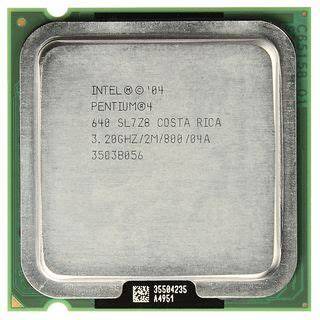
Intel Pentium 4: pagrindinės charakteristikos ir istorinė reikšmė
- Willamette pradinis sluoksnis (180 nm) su Socket 423; vėliau persikėta į Socket 478.
- Northwood atnaujino L2 talpą iki 512 KB, sumažino energijos suvartojimą dėl 130 nm procesų.
- Prescott įvedė 90 nm procesą, SSE3 ir 64 bitus (pradinis žingsnis 64 bitinės architektūros link), didesnį L2 ir didesnį TDP.
- Hyper-Threading technologija (HTT) pristatyta 3.0 GHz ir vėliau, siekiant didesnio lygiagreto vykdymo.
- NetBurst architektūra siekė aukštų takų dažnių, bet tuo pačiu metu patyrė šilumos augimą ir energijos vartojimo problemas.
- Galiausiai 2006-2008 m. Intel perėjo prie Core architektūros, kuri gerokai pagerino energijos efektyvumą ir našumą vienai ciklui.
Pirmasis (ir retas) „Pentium 4“!
Pagrindinės plokštės klasifikacijos ir jų kontekstai
- Pagal procesorių šeimas: 386, 486, Pentium (586), Pentium Pro (686) - toliau įrankiotos naujesnės kartos.
- Pagal I/O magistrales: ISA, EISA, MCA, VESA, PCI - skirtingos plokščių sąsajos laikotarpiu.
- Pagal mikroschemų rinkinį: NX Neptune, FX (430/440 serijos), SiS serija, Opti serija - skirtingos integracijos lygio plokštės.
- Pagal struktūrą: Standartinio dydžio, Baby AT, ATX, NLX - skirtingos įdiegimo išdėstymo galimybės ir aušinimo architektūra.
- Pagal funkcijas: PnP BIOS ir PnP OS palaikymo plokštės, plokštės be jungčių - modernių buitinų modelių patobulinimai.
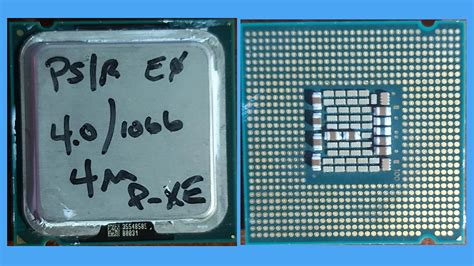
Kodėl Pentium 4 sukūrė tam tikras problemas ir kokie buvo sprendimai?
NetBurst architektūra buvo orientuota į aukštus takus, bet nesugebėjo užtikrinti tokio pat geresnio efektyvumo kaip vėlesnės Core architektūros. Dėl didelio šilumos išsklaidymo, energijos suvartojimo ir ribotos instrukcijų rinkinio integracijos Pentium 4 dažnai turėjo ribotą našumą modernioms užduotims. Hyper-Threading laikui bėgant pateko į kai kurias versijas kaip paguoda dėl lygiagrečio vykdymo, tačiau realiai daugeliui programų poveikis priklausė nuo kodo optimizacijos SSE2/SSE3 palaikymo. Iki 2006 m. Intel perėjo į Core seriją, kuri uždarbavo daug geresnį energijos vartojimo efektyvumą ir našumą vienai ciklaiui.
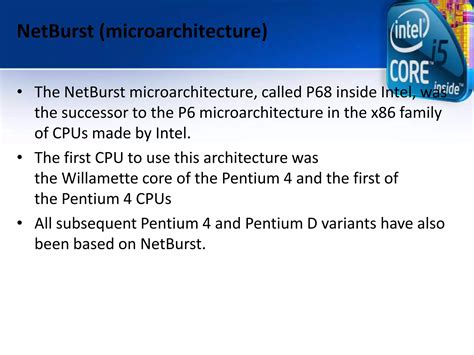
Kaip pasirinkti tinkamą Pentium 4 procesorių retro sistemai ar senesniam biudžetui
- Koncepcija: dėmesys takui, L2 buferio dydžiui (512 KB vs 1 MB), socket tipui (478 ar LGA775), TDP, ir aušintuvo palaikymui.
- Memorija: DDR, DDR2 atmintis - DDR3/DDR4 nėra suderinamos su senesnėmis P4 plokštėmis.
- Platformos suderinamumas: pasirinkti motherboard su atitinkamu chipsetu (pvz., HT palaikymas/nebuvimas ir kt.).
- Patikimumas: nepirkite nežinomos kilmės įrenginių be aiškaus „tested working“ įrodymo; geriau pirkti patikrintas laikmenas su SL-number identifikacija (pvz., SL6XK, SL7Z9).
- Biudžetas: dažnai 12-20 USD už geriausiai tiriamą Northwood seriją; daugiau nei 20 USD gali duoti mažiau naudos - verta sutelkti dėmesį į patikrintą modelį.
Pirmasis (ir retas) „Pentium 4“!
Dažniausiai užduodami klausimai apie Pentium 4
- Ar Pentium 4 gali veikti Windows 11? Ne. Windows 11 reikalauja naujesnių Core arba Intel Xeon architektūrų ir TPM 2.0 bei UEFI; Pentium 4 turi senesnį BIOS ir trūksta modernių funkcijų.
- Kodėl Pentium 4 buvo laikomas „Fastest CPU“ tik tam tikrose programose? Nes NetBurst architektūra daugelyje programų priklausė nuo kodo optimizacijos ir duomenų judėjimo per cache, o SSE2/SSE3 palaikymas variantų atžvilgiu lėmė didesnį efektyvumą.
- Kokia svarbiausia sąlyga renkantis Pentium 4 laikotarpiui? Tą sąlygą lemia pagrindinės plokštės soketas (478 ar 775) ir aušintuvo gebėjimas atlaikyti maksimalią TDP.
- Kokie dažnai pasitaikantys trūkumai? Perkaitimas, suderinamumo problemos su moderniomis plokštėmis ir spartų, bet silpną realų našumą modernioms programoms.